
To spot a fake calculator when shopping online in [year], consumers inspect physical flaws like unresponsive buttons or subpar build quality while evaluating pricing discrepancies and seller ratings for credibility. Manufacturer authentication features, such as hologram stickers and QR codes, require verification against official databases. Packaging irregularities and label inconsistencies further indicate counterfeits. Deeper examination of these strategies yields enhanced safeguards against fraudulent purchases.
Key Takeaways
- Inspect for physical flaws like unresponsive buttons or poor screen quality before purchase.
- Compare prices with trusted sources and avoid sellers with ratings below 90% positive feedback.
- Verify hologram stickers and QR codes using manufacturer tools for authenticity.
- Watch for exaggerated claims or urgency tactics, such as fake limited-time deals.
- Check return policies for full refunds and ensure payments use secure gateways like PayPal.
Identifying Physical Product Flaws
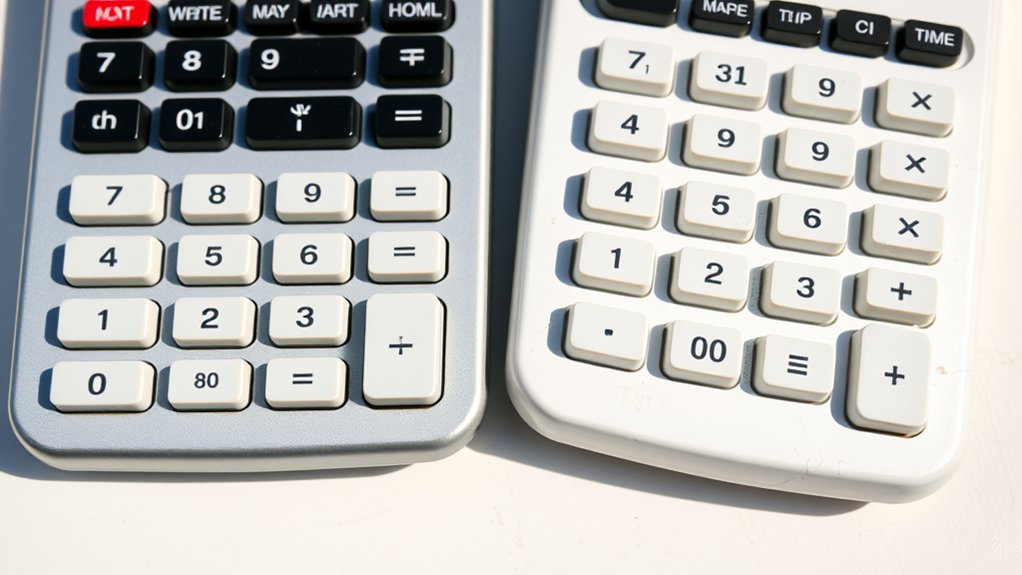
Identifying physical flaws in calculators requires a systematic inspection of build quality, packaging, and security elements. Build quality issues often manifest as buttons with inconsistent responsiveness, excessive play, or unusual sounds during operation, suggesting substandard assembly. Screens may exhibit lag in touch functions or unresponsive displays, while battery compartments lack secure fastenings, and edges show rough finishes or an unusually light, hollow feel from inferior materials. Moreover, in the digital space, counterfeit issues extend to vault apps that mimic calculators to conceal private files.
Packaging flaws include hologram stickers with partial edge coverage, uneven adhesive residue, and considerably lighter weights than authentic models. In contrast, genuine products feature hologram stickers with color-changing characteristics that are difficult to replicate. Labels often display blurred fonts or misalignment, with signs of tampering like disturbed tamper-evident tape. A missing manual frequently accompanies these irregularities, indicating potential counterfeits.
Security elements, such as QR codes or microprinted text, reveal flaws like pixelation, lack of UV-reactive response, or blurry details under magnification, underscoring the need for thorough verification to detect fakes.
Evaluating Pricing Discrepancies
Pricing discrepancies in calculators and similar products often signal counterfeit items, necessitating a systematic analysis of factors like hidden fees, dynamic pricing, and percentage differences to verify authenticity. Price adjustment mechanisms, such as dynamic pricing based on user behavior, can lead to unexpected costs, including additional shipping fees or bundling charges that inflate totals. Discount deception frequently manifests through tactics like sudden price drops or overbuying incentives, masking true values and violating expectations. To evaluate these, employ third-party price comparison tools and cross-reference marketplaces for benchmarks, while calculating percentage differences using the formula: \( ext{Difference} = rac{|V_{ext{new}} – V_{ext{original}}|}{(V_{ext{new}} + V_{ext{original}})/2} imes 100 \). Alerts for changes exceeding 25-30% indicate potential manipulation. Moreover, to enhance accuracy in spotting fakes, users can apply a unit price calculation method that compares costs per unit for better decision-making. Monitoring promotional cycles and analyzing seller-specific costs guarantees reliable pricing, with customer reviews revealing hidden fees or inconsistent unit pricing across channels, and early communication of total costs can help mitigate discrepancies by fostering trust and reducing cart abandonment.
Checking Manufacturer Authentication Features
Manufacturer authentication features for calculators include hologram sticker verification, which assesses reflectivity, design precision, and material integrity to detect counterfeits. QR code scanning requires using manufacturer tools to cross-check codes against encrypted patterns and official databases for authenticity. Serial number checks involve validating formats and matching them with manufacturer records to confirm product legitimacy. For effective verification, registration on the Worldwide Education Website is necessary to access these authentication methods.
Hologram Sticker Verification
Hologram stickers provide a critical layer of authentication for genuine products, featuring dynamic elements like color shifts when tilted and complex 3D effects that counterfeit versions often fail to replicate. Hologram material quality is a key differentiator; authentic ones exhibit smooth, high-resolution textures with uninterrupted holographic continuity, including reversed shading patterns under rotation and microtext visible only under magnification. Genuine stickers demonstrate precise hologram color shifts, such as angle-dependent light scattering that reveals hidden security elements. In contrast, counterfeit indicators include low-quality materials with static colors, uniform thickness, and flat surfaces lacking 3D effects or micro-engraved details. They may peel easily without residue, failing tamper-evident features like distortion upon removal. Specialized inspection, such as angled examination, guarantees alignment with manufacturer guidelines for verifying these elements effectively.
QR Code Scanning
QR code scanning emerges as a pivotal tool for verifying calculator authenticity through manufacturer features. Manufacturers like CASIO implement QR codes on packaging and devices for validation. Best practices include using a reliable smartphone QR reader to scan the package sticker or device’s generated code, ensuring the scan links directly to the official authenticity page. The process yields three-tier results: “Likely genuine” for matched IDs, “May not be” for inconsistencies, or “Not genuine” for failures. Scan frequency trends, monitored by CASIO’s system, help detect anomalies, enhancing counterfeit identification. For installed codes, power on the device and access via settings to reveal a 20-digit ID for cross-checking. Genuine indicators rely on database matches, while unreadable or absent codes signal fakes, prompting avoidance and reporting. Always verify results against official sources to mitigate mimicry risks.
Serial Number Check
Serial numbers provide a reliable method for verifying calculator authenticity, with manufacturers like CASIO and TI embedding unique identifiers accessible through device interfaces. Serial number validation involves accessing manufacturer-specific formats, such as CASIO’s 24-character alphanumeric ID via key combinations or TI’s 14-digit serial through device menus, and cross-referencing with official databases. Unique identifier analysis requires matching patterns, ensuring IDs align with physical packaging, and identifying red flags like shortened lengths, invalid characters, or non-verifiable strings, which signal counterfeits. Verification through CASIO websites or TI Connect software is essential, as unresponsive IDs indicate inauthenticity. While third-party tools offer basic comparisons, their limitations—lacking database access—compromise reliability, emphasizing the need for official channels to confirm legitimacy. This process safeguards against fraudulent devices in online purchases.
Inspecting Packaging for Authenticity
Inspecting packaging for authenticity begins with hologram sticker analysis, which examines features like color-shifting hues and shading reversal to identify genuine products. Serial number checks verify that codes on the packaging align with manufacturer databases, confirming item legitimacy. Regulatory label verification assesses compliance markers against established standards to detect potential counterfeits.
Hologram Sticker Analysis
Hologram stickers on calculator packaging provide a primary means of authenticity verification through advanced optical features. Hologram technology integrates iridescent foil and 3D structures, while hologram characteristics guarantee high-resolution imprints and anti-counterfeit layers to detect fakes. These elements, such as color-shifts and microtext, enhance security without relying on serial numbers.
- Verify color-shifts when tilted: Genuine stickers exhibit multi-colored reflections from varying angles, indicating advanced hologram technology.
- Check shading reversal upon rotation: Authenticity is confirmed by directional changes in reflectivity, a key hologram characteristic.
- Inspect for microtext under magnification: Look for embedded “AUTHENTIC” text, which requires close examination to validate the sticker’s integrity.
Tamper-evident adhesives and responsive features, like laser-revealed messages, further bolster verification in retail packaging.
Serial Number Check
Beyond visual authentication methods like hologram stickers, serial numbers on packaging and devices offer a reliable verification mechanism. Serial number importance lies in their manufacturer-specific formats, such as Casio’s 24-character alphanumeric IDs or TI’s 14-digit product numbers, which guarantee unique identification and help detect counterfeits. The authentication process begins with inspecting packaging for accurate placement on adhesive labels or embossed surfaces, cross-referencing with the device’s serial number for consistency in structure and composition. Users should verify unusual character patterns, missing details, or formatting discrepancies as indicators of fraud. For thorough validation, input IDs into official manufacturer databases or scan QR codes to confirm legitimacy, affirming the packaging’s serial number aligns with device records and prevents counterfeit infiltration.
Regulatory Label Verification
Regulatory label verification serves as a critical step in authenticating packaging, involving the inspection of certification marks like FSSAI or AGMARK to confirm compliance with mandatory standards. This method emphasizes regulatory compliance by guaranteeing label accuracy through meticulous checks of product details, helping consumers identify genuine calculators amid counterfeits.
- Examine certification marks: Verify the presence of mandatory stamps like FSSAI or AGMARK on packaging to confirm regulatory compliance and authenticity.
- Assess label accuracy: Cross-check manufacturer details, such as name, address, and batch codes, against official brand records to detect discrepancies.
- Validate specifications: Ascertain technical details and production dates align with brand claims, maintaining label accuracy and adherence to standards.
Reviewing Documentation and Labels
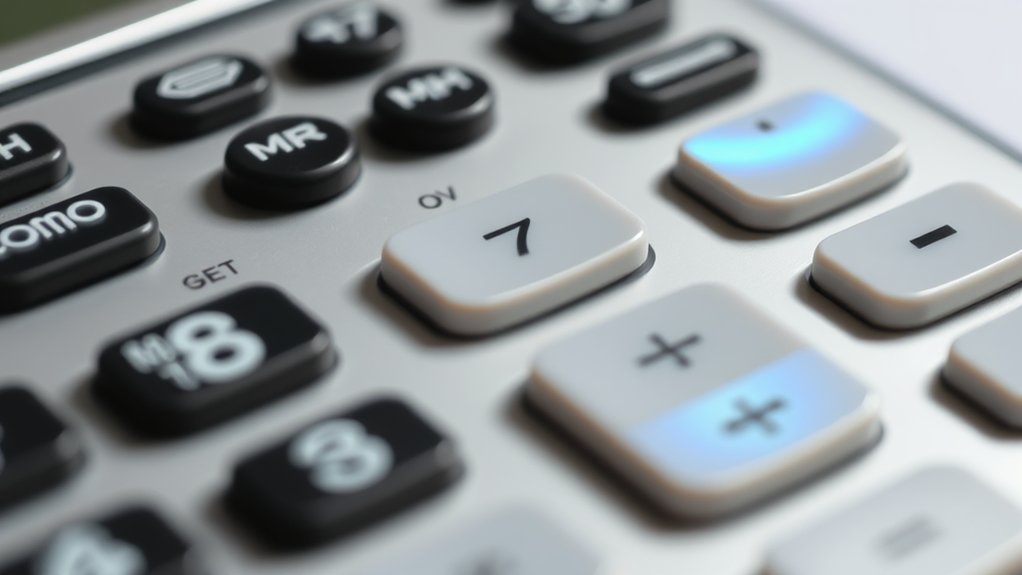
Reviewing documentation and labels offers reliable methods for detecting counterfeit calculators. Label quality serves as a primary indicator; genuine products feature high-resolution glyphic representations and multilingual text for function accessibility and regional compliance. Model clarity is essential, with authentic calculators displaying precise, legible model numbers and “CASIO.COM Exam Approved” labels that denote official verification. Consistent branding—evident in uniform fonts, logos, and color schemes—further distinguishes legitimate items from fakes, which often exhibit inconsistencies or poor reproduction. Packaging includes tamper-proof seals and hologram stickers that resist replication, alongside detailed instructions for authenticity checks. Regional certifications, such as UK exam approvals, appear on official documentation, alongside CASIO’s contact details and warranty information, enabling consumers to verify product legitimacy effectively.
Detecting Digital Anomalies in Apps
While physical checks of documentation and labels identify counterfeit calculators, digital anomalies in associated apps serve as key indicators of potential fakes. These anomalies often manifest as unexpected behaviors, resistance to reverse engineering, and suspicious app permissions linked to malicious patterns. Users must scrutinize apps for signs of compromise to avoid security risks.
- Identify unexpected behaviors: Apps exhibiting excessive resource consumption during idle states or inconsistent calculation results suggest underlying issues, potentially indicating malware integration.
- Detect resistance to reverse engineering: Obscured code sections that hinder analysis often mask malicious patterns, such as third-party libraries with known fingerprints, warranting further investigation.
- Review app permissions: Unauthorized data handling, like storing logs without explicit consent or bypassing sandbox policies, reveals malicious patterns that compromise user privacy and device integrity.
Spotting Hidden Functionalities in Software
Spotting hidden functionalities in software involves detecting hidden vaults that store unauthorized data beyond the app’s stated purpose. Inconsistent behaviors, such as unexplained resource usage or deviation from expected operations, signal potential embedded threats. Verifying app permissions against declared functionalities guarantees alignment and prevents exploitation of unmonitored access rights.
Detect Hidden Vaults
Detecting hidden vaults in software requires integrating machine learning techniques, such as AI-driven secret scanning, to uncover concealed functionalities like embedded credentials or anomalous behaviors. This involves detecting code vulnerabilities through static analysis to identify undocumented features, while analyzing API behaviors via dynamic methods reveals unexpected interactions. Hybrid approaches enhance accuracy by combining ML classifiers for high-precision detection.
- Utilize AI-driven secret scanning to detect code vulnerabilities, achieving 96.45% accuracy in identifying embedded credentials across formats like JSON or YAML.
- Apply execution trace analysis for analyzing API behaviors, spotting anomalies such as unauthorized calls or resource usage mismatches in runtime environments.
- Integrate static and dynamic analysis using tools like BFDL to validate code against expected profiles, minimizing false positives in firmware detection.
Spot Inconsistent Behaviors
In applications designed to mask hidden functionalities, inconsistent behaviors emerge as critical indicators of concealed software features, such as those in fake calculators. Inconsistent responses, such as delayed computation outputs, often stem from background processes encrypting or managing secret data, diverging from standard app performance. Unusual loading times, including prolonged app freezes or erratic startup delays, signal resource-intensive covert operations. Apps may also display heightened battery consumption and fluctuating memory usage patterns, flagging deviations from legitimate calculators. These anomalies, detectable through monitoring tools, enable identification of potential fakes by analyzing behavioral irregularities in real-time user interactions.
Verify App Permissions
Verifying app permissions reveals hidden functionalities by scrutinizing requests that exceed legitimate needs. App permission transparency is essential for detecting fraudulent calculator apps that mask malicious intents, such as unwarranted data access. Permission audit strategies help users identify risks by systematically evaluating requests against app purposes, drawing from signs like excessive permissions and sensitive data collection.
- Examine excessive permissions: Check for unnecessary access to contacts or location, which may indicate hidden data harvesting beyond basic calculations.
- Audit sensitive data requests: Verify if the app seeks email or payment details unrelated to functionality, signaling potential phishing or exploitation.
- Monitor network permissions: Track unexplained data transmission to third-party servers, revealing background interception or malware embedding for real-time tracking.
Assessing Retailer and Seller Practices
Evaluating retailer and seller practices is essential for identifying counterfeit calculators, beginning with evaluations of seller credibility such as platform-verified badges, ratings above 90% positive, and clear physical addresses. Seller reviews provide critical insights; consumers should analyze feedback for patterns, prioritizing ratings above 90% and recent reviews to detect quality complaints like unresponsive buttons. Avoid sellers with generic profiles lacking inventory transparency or participation in trust programs. Return policies further safeguard against counterfeits; verify explicit terms offering full refunds for inauthentic items, minimal restocking fees, and platform protections like money-back guarantees. Cross-reference these with seller reviews to ascertain consistency, as discrepancies may indicate fraudulent operations. By integrating seller reviews and robust return policies, buyers can mitigate risks associated with unverified sellers, enhancing overall purchase security.
Verifying Online Security Measures
Beyond seller assessments, buyers should verify online security measures to mitigate fraud risks when purchasing calculators. Security certifications and data encryption serve as foundational indicators of a site’s reliability, protecting sensitive data from interception during transactions.
Beyond seller assessments, verify online security measures like certifications and encryption to mitigate fraud risks in calculator purchases.
To effectively evaluate these elements, buyers can follow these steps:
- Examine SSL Certificates for Data Encryption: Verify the padlock icon, HTTPS prefix, and trusted CA issuers like DigiCert in certificate details to guarantee full encryption of customer data and absence of browser warnings.
- Check Security Certifications and Payment Security: Confirm PCI-DSS compliance badges, secure gateways such as Stripe or PayPal, and features like CVV validation and tokenization to safeguard payment processes against fraud.
- Assess Multi-Factor Authentication (MFA): Verify availability of 2FA options via SMS, email, or apps, along with regular verification prompts, to bolster account security and prevent unauthorized access.
Recognizing Common Sales Tactics
Recognizing common sales tactics is essential for buyers to identify fraudulent calculator promotions, as sellers often deploy deceptive strategies to manipulate perceptions and expedite purchases. Sales tactics frequently feature fake testimonials, such as staged positive reviews that inflate trust through unnatural patterns like sudden rating spikes, while suppressing negative feedback. Exaggerated claims, including fabricated statistics like unrealistic success rates or misrepresenting endorsements, mislead consumers by promising unattainable outcomes. Urgency and scarcity tactics, such as fake limited availability counters or countdown timers tied to calculator results, create artificial pressure for immediate action. Oversimplified formulas with undefined variables and lacking transparency further deceive buyers. By scrutinizing these elements—review manipulation, inflated metrics, and false deadlines—consumers can detect deception and make informed decisions. This approach enhances protection against manipulative sales tactics in online calculator offerings.
Frequently Asked Questions
How Do I Report a Counterfeit Calculator?
Reporting a counterfeit calculator involves adhering to established reporting procedures. Individuals initiate this by contacting the U.S. Secret Service for federal investigations or utilizing online platforms’ mechanisms, such as Amazon’s reporting tools, to flag sellers. Essential information includes purchase details, seller profiles, and visual evidence. Subsequent steps encompass notifying trademark holders and local law enforcement, ensuring thorough documentation for effective resolution and potential prosecution. Follow up with authorities to track progress.
What if My Calculator Lacks a Serial Number?
A calculator lacking a serial number frequently indicates potential counterfeiting, as serial numbers represent common features in genuine devices for verification and tracking. Users should scrutinize user reviews for reported anomalies, such as missing identifiers in similar models. Alternative methods, including hologram inspection and QR code scanning, provide reliable authentication, prioritizing devices with consistent build quality and official certifications.
Can Fake Calculators Void Warranties?
Fake calculators can void warranties if they cause damage or are linked to improper servicing, as outlined in the Magnuson-Moss Warranty Act. Warranty implications include potential coverage denial for failures attributed to counterfeit components, such as inconsistent quality or malfunctions. Effective counterfeit detection—through verifying seller authenticity and product certifications—is essential to mitigate these risks and maintain warranty validity. Exceptions apply only when non-genuine parts directly cause issues.
How Do I Safely Dispose of a Fake Device?
Safe disposal of a fake device demands proper disposal methods to minimize environmental impact. This involves utilizing certified recycling programs, such as those separating components for reuse, or employing physical shredding to prevent redistribution, as mandated by regulatory authorities. Adhering to these protocols reduces risks like air pollution and guarantees data security, aligning with legal obligations for environmentally responsible handling. Partnerships with specialized facilities enhance efficacy.
Are There Fake Calculator Batteries Available?
Counterfeit calculator batteries are indeed available in various markets, presenting safety and performance risks. Battery identification involves scrutinizing packaging for flaws, pricing anomalies, and missing certifications like UL or ETL. Effective counterfeit detection requires verifying holograms, cross-referencing specifications with official datasheets, and purchasing from authorized dealers to avoid hazards such as thermal runaway, rapid draining, and device incompatibility.
Conclusion
Ultimately, identifying counterfeit calculators amid online shopping in [year] demands a rigorous, multifaceted strategy: scrutinize physical flaws for inconsistencies, assess pricing anomalies, verify manufacturer authentication markers, evaluate packaging integrity, inspect documentation accuracy, detect hidden software features, analyze seller practices, and confirm security protocols. Consumers who systematically apply these technical criteria minimize risks of fraud and secure authentic purchases.
References
- https://edu.casio.com/intl/authenticity/
- https://blog.familytime.io/unveiling-fake-calculator-apps-how-to-identify-them-with-familytime-app.ft
- https://edu.casio.com/en/authenticity_check_system2/
- https://www.authenticid.com
- https://www.experian.com/blogs/ask-experian/red-flags-to-look-for-when-shopping-online/
- https://www.qustodio.com/en/blog/how-to-spot-a-fake-calculator-app/
- https://www.youtube.com/watch?v=VGY9Drg_0a0
- https://snappt.com/blog/spot-fake-id/
- https://www.4menearme.com/tools/price-comparison-calculator/
- https://priceva.com/blog/pricing-discrepancy